The United States Supreme Court added three significant cases to its October 2026 term docket this week, agreeing to resolve disputes over government records tied to the Department of Government Efficiency, immigration restrictions related to terrorism, and the appeal rights of federal prisoners.
The most prominent of the three concerns DOGE, the entity established by President Donald Trump in January 2025 to modernize federal technology and reduce federal spending and staffing. The justices agreed to review whether federal courts can order extensive discovery involving DOGE in a Freedom of Information Act dispute. The case could define the boundaries of executive branch confidentiality for an entity that, while not a cabinet level department, has played a central role in the administration’s cost cutting efforts.
Transparency advocates argue that DOGE’s sweeping influence over federal agencies makes its records a matter of legitimate public interest, while the administration contends that broad discovery would intrude on internal deliberations. How the court balances those interests could shape FOIA litigation for years.
In the second case, the justices will decide whether a Nigerian asylum seeker’s work as a cook for a separatist organization counts as material support for terrorism under federal immigration law. The question, arising under 8 U.S.C. section 1182(a)(3)(B)(iv)(VI), is whether support must advance an organization’s actual commission of terrorism to render an immigrant removable and ineligible for benefits. The outcome could affect how immigration authorities treat low level or indirect associations with designated groups.
The third case examines the rights of federal prisoners to appeal their convictions when different federal appeals courts have reached conflicting interpretations of constitutional law. At issue is whether a certificate of appealability should be granted where binding circuit precedent cuts against the petitioner but another circuit has ruled in his favor. The decision could open appellate doors for prisoners caught in circuit splits.
The court also granted review in Department of Homeland Security v. D.V.D., concerning the Trump administration’s practice of deporting migrants to third countries not listed in their removal orders. In granting certiorari, the court allowed the government to continue the practice while the case proceeds, setting up arguments over the scope of judicial review under the immigration statutes.
Together, the new grants underscore how heavily the court’s current term leans into disputes involving the Trump administration’s policies, from immigration enforcement to the structure of the executive branch itself.
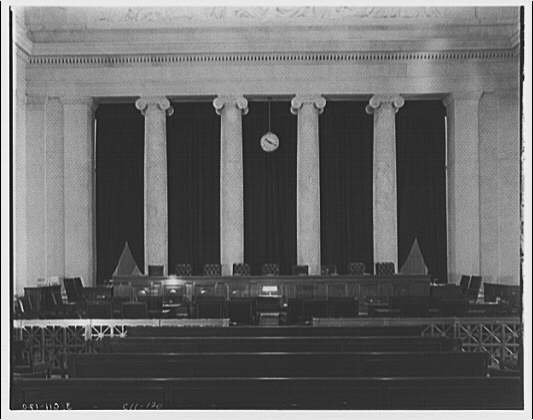
Sources: Beinsure, JD Supra. Image: Supreme Court courtroom interior, public domain by Theodor Horydczak via Wikimedia Commons.