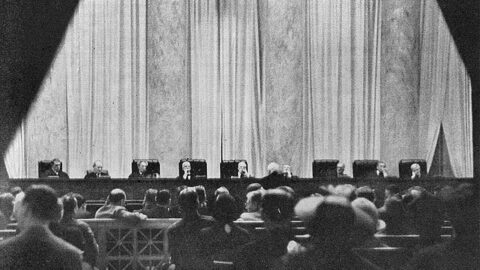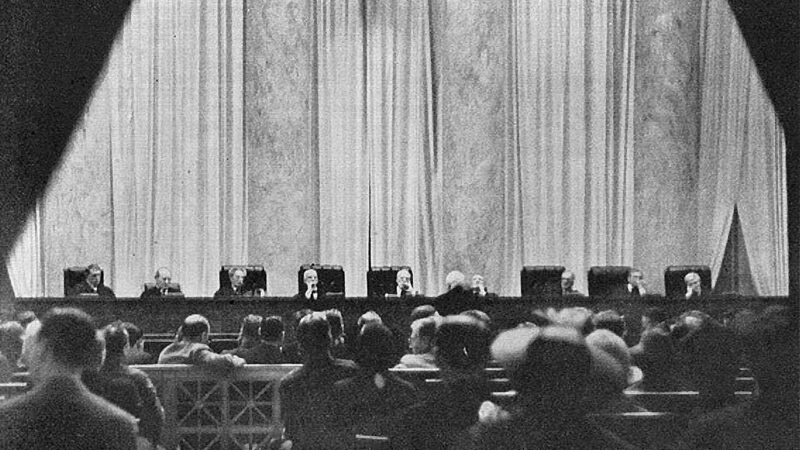
When the Supreme Court convenes for oral arguments in December, the justices will take up what many court watchers call the most important gun rights cases since 2008: two challenges to state and local bans on AR-15 style semiautomatic rifles.
The cases, Viramontes v. Cook County and Grant v. Higgins, arise from lower court decisions that upheld bans on assault style weapons in Connecticut and in Cook County, Illinois, which includes the city of Chicago. Gun rights groups argue that Supreme Court precedents protect these weapons as arms in common use by law abiding Americans, while officials in Connecticut and Cook County have defended the bans by describing the rifles as weapons of war and the guns of choice for criminals.
The legal framework comes from the court’s 2022 decision in New York State Rifle and Pistol Association v. Bruen, which requires governments to justify firearm restrictions through the nation’s historical tradition of regulation. Former solicitor general Don Verrilli has predicted the court will rule against the bans, noting that millions of Americans own such rifles.
The December arguments will test whether lower courts have been faithfully applying Bruen or, as critics charge, treating the Second Amendment as a second class right when the firearm at issue is politically unpopular. Several federal appeals courts have upheld assault weapon bans by finding historical analogues in laws disarming groups deemed dangerous, reasoning that has drawn sharp criticism from gun rights advocates.
The stakes extend beyond the two cases. A broad ruling could call into question similar bans in roughly a handful of states, while a narrow decision might leave the lower court landscape largely intact. Either way, the opinions will give crucial guidance on how Bruen’s history and tradition test applies to commonly owned firearms.
Meanwhile, related Second Amendment litigation continues to percolate. In October, the full Third Circuit ruled that a decades old nonviolent DUI conviction cannot automatically strip a Pennsylvania man of his gun rights for life, while upholding the ban for a man whose record involved threats of violence. And in New York, a federal judge in Antonyuk v. James recently applied binding Second Circuit precedent to uphold most of the state’s sensitive place carry restrictions, even while expressing serious doubts about them.
For a court with a 6-3 conservative majority that has steadily expanded gun rights this decade, December’s arguments may be the term’s defining moment.
Sources: The Gun Mag, Political.org. Image: Lady Justice statue, CC BY-SA 4.0 by DP Singh Bhullar via Wikimedia Commons.